About WeTrip
Your Trusted Way to China
U.S.-registered and backed by Nasdaq-listed WeBuy Global Ltd., supported by professional teams across Singapore, China, and Malaysia.
Follow Us




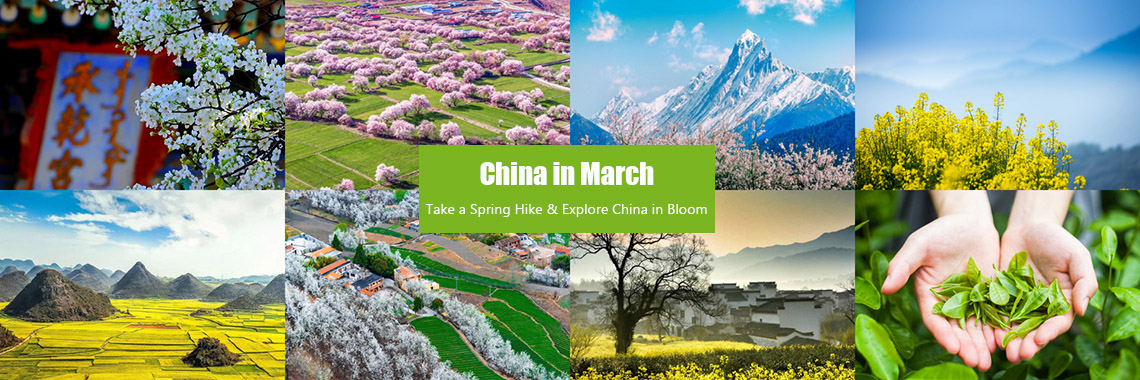
Seasonally speaking, the march is the first month of spring. However, it is simply hard to describe the China weather in March, since the country is so vast and diverse from the arid north to the subtropical forests in the wetter south. In the same march, it may snows in Xining, while people in Hainan eat ice cream . The temperature varies a lot in China. But for the most popular tourist destinations in China, it's getting much warmer and more temperate than the wintertime. From mid-march, it starts the golden time for outdoor activities like hiking, flower appreciation, tea picking, etc. No matter what you are looking for and planning to do in March, you can always find a popular destination in China in March. Continue to read the following to learn more about the weather in March and top-recommended sites in China.
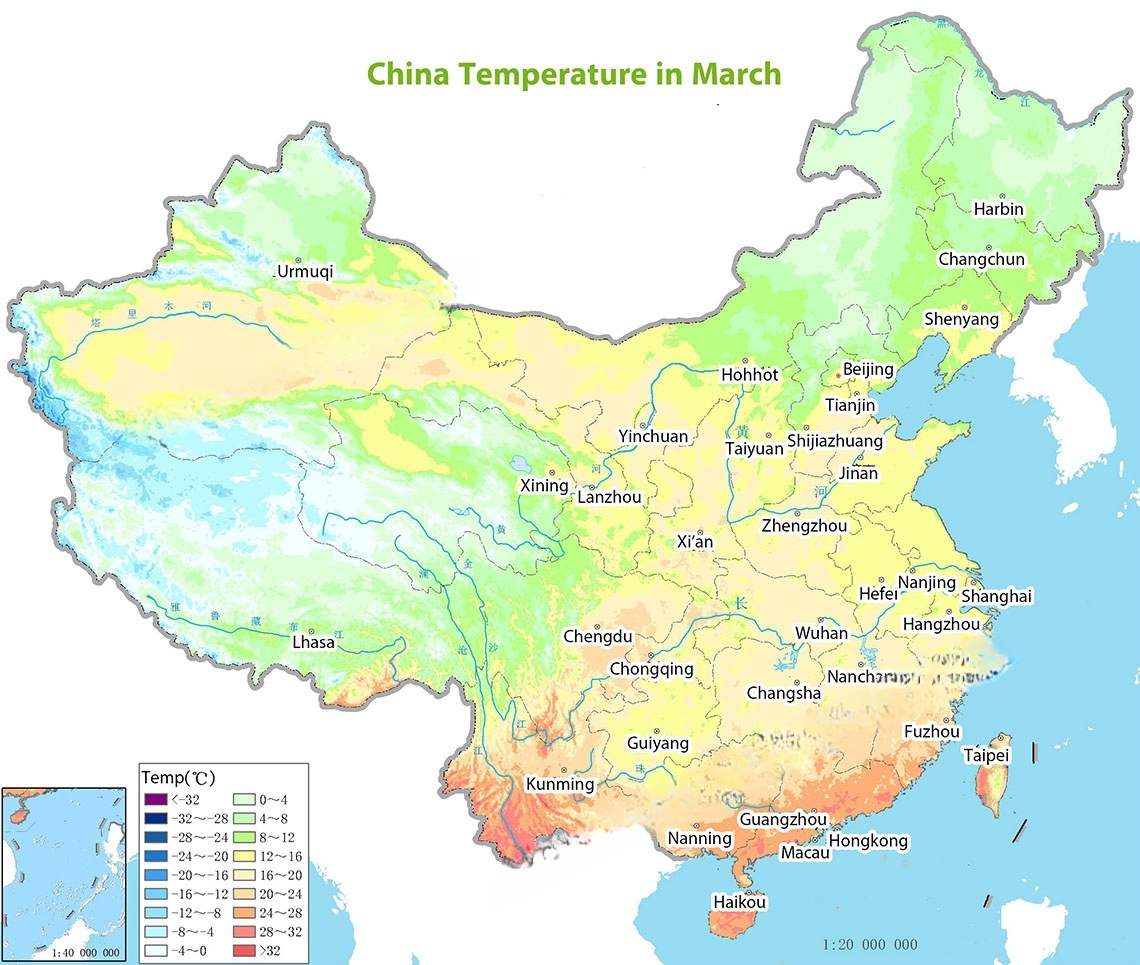
China Temperatures in March (Click to Enlarge)
The territory of China is very vast, including the densely populated plains in the east, board grasslands in the north, hilly and mountainous landscape in the south, and rising highlands around Himalaya ranges. The temperature, humidity, and daylight time are very different. Here, we have some major provincial cities and popular scenic cities listed according to their locations with detailed weather info offered for your reference.
| Area | Cities (Provinces/Municipalities) | Weather & Climate |
|---|---|---|
| Northern China | Beijing, Xian(Shaanxi), Shandong, Luoyang(Henan), Pingyao(Shanxi) and other places | Avg Temperature: 0°C~16°C Cold in Early March, Dry and Windy: Northern China is mainly in the temperate climate zone with monsoon and continental climate. In spring, the temperature increases rapidly. In early march, it can be still cold, and graudally it can be over 10°C. The region also receives little rainfall in March. |
| Southeastern China | Shanghai, Huangshan(Anhui), Hangzhou(Zhejiang), Suzhou(Jiangsu) and other places | Avg Temperature: 7°C~16°C Warmer, Mild, Windy, Drizzling: Most of southeast China belongs to the subtropical monsoon climate zone. The average temperature of cities in the middle and lower reaches of the Yangtze River doesn't differ much. Spring drizzles often occur, therefore umbrellas are necessary for travelling. |
| Southern China | Guilin(Guangxi), Zhangjiajie(Hunan) and other places | Avg Temperature: 12°C~20°C Cloudy, Drizzling, Mild, Temperature Differences: Both Guilin and Zhangjiajie have a subtropical monsoon climate, with four distinct season. Spring in Guilin is mild and it is still a little bit cold in early March and gets warmer in late spring. The average altitude of the Zhangjiajie scenic area is 1000 meters, and due to the difference, the temperature difference between day and night can reach 10°C. |
| Southwestern China | Chengdu (Sichuan), Yunnan, Guizhou and other places | Avg Temperature: 10°C~24°C Pleasantly Warm, Cloudy, Comfortable: Most areas of Sichuan, Yunnan and Guizhou provinces belong to the subtropical monsoon climate zone, while the higher altitude areas belong to the alpine plateau climate zone. The average temperatures in Chongqing, Chengdu and east Sichuan are pretty much the same. Guizhou and Yunnan are mountainous with the similar climate. It is still a little cold in the early March. Visitors are recommended to bring umbrellas for the sudden drizzles. |
| Northwestern China | Gansu, Xinjiang, Ningxia and other places | Avg Temperature: -2°C~12°C Sunny, Cold, Dry: Most of the provinces and cities in this region are in the temperate continental climate zone. The early March is still very cold. The climate in March is characterized by a large temperature difference between day and night, less precipitation, heavy wind and sand, and strong ultraviolet. It is recommended to bring extra layers, sunblocks, dusk masks, etc. |
| Southern Coastal China | Hong Kong, Guangzhou (Guangdong), Shenzhen, Macau, Hainan, Xiamen and other places | Avg Temperature: 16°C~28°C Mild, Pleasantly Warm, Cloudy, Windy: Most of the region belongs to the subtropical monsoon climate zone, partially belonging to the tropical monsoon climate zone. In March, a cold wind can still blow, and highs can remain around 13/15 °C (55/59 °F), especially in the first half of the month. By mid-March, with the increase in temperature, the first thunderstorms occur. |
| Northeastern China | Harbin (Heilongjiang), Jilin, Shenyang (Liaoning) and other places | Avg Temperature: -4°C~12°C Cold, Windy, Dry: Most of Northeast China belongs to the temperate monsoon climate zone. The temperature increases rapidly. It is still below freezing and precipitation usually occurs not very often. |
| Qinghai-Tibet Plateau | Qinghai, Tibet | Avg Temperature: -12°C~8°C Variable, Cold, Sunny, Windy, Dry: Most areas of Qinghai and Tibet are located on the Qinghai-Tibet Plateau, which belongs to the plateau mountain climate zone. It is still very cold in early spring. It has a large temperature difference between day and night: it can be very cold with possible snow and frost especially at night, while the days can be sunny and mild. If you would like to visit Nyingchi, the climate there is more related to Western Sichuan climate. Remember to bring sunscreen always even you do not feel hot. |
| Inner-Mongolia | Inner Mongolia | Avg Temperature: 0°C~20°C Short, Mild, Arid, Windy, Regional Sandstorm: Due to its elongated shape, Inner Mongolia has a four-season monsoon climate with regional variations, most of which belong to the temperate continental climate. The east and northeast part are mostly grasslands, while the west part is mostly deserts and gobis. The temperature difference between day and night is large in desert areas; However, grassland area is cooler and the temperature difference is smaller, the climate is milder than the middle and western part. |
It's hard to say the most suitable clothes to wear in March in China, for this country has a wide range of weather conditions in different areas. On the same day, people may wear T-shirts in Guangzhou, while people in Harbin haven't taken off their down jackets. As the temperature goes up rapidly in most places of China, usually, shirts, long skirts, sweaters, windbreakers, casual clothes, jackets are recommended for the southern and central areas. If you are going to visit these cities with large temperature differences or high altitudes. Sweater, down jacket or down coat, winter pants, hat, scarf, and gloves are suggested, like Xinjiang and Tibet. And if you are heading to the mountainous areas or rainy sites in southwestern China, comfortable hiking shoes and raincoats are needed. Visiting places like Hainan, and Gansu requires sunblock items for the ultraviolet radiation is strong while going to some area inner Mongolia and Beijing need a bring a mask and skincare product for the dry weather. For more detailed info about the weather and advisable packing listed for the certain destination of your China trip, feel free to send your inquiry to our professional travel consultant.
- Stroll around the Royal Palace and Imperial Gardens with Early Spring Flowers
As spring steps into Beijing in March, the temperature gradually gets warm. It is the best time to appreciate the early blooming flowers in the imperial royal gardens of Forbidden City, Summer Palace, and Temple of Heaven. On a fine day, roaming around the imperial gardens, you can see all kinds of flowers like pear blossoms, peach blossoms, lilac, crabapple, peony, etc. With these lovely flowers, the gentle spring breeze, and genial sunshine, the leisure time in the palaces can be very relaxing. Also, the famous Yuyuantan Park with gorgeous pink blossoms attracts many visitors to appreciate the beauty of natural harmony with the delicate and solemn royal architecture.
Forbidden City in Spring
- Visit the "Spring City" with the Nearby Golden Sea of Rapeseed Flowers
As Kunming is usually known as the "Spring City" of China for its moderate temperature and various blooming flowers in springtime, the capital city of Yunnan, Kunming has become a top popular destination during springtime. The oldest karst landscape in Shilin(the stone forest), flourishing flower markets, and Yuantong Temple with cherry blossom are the most unmissable sites to feel the spring vibes.
Also, about 210km away from Kunming, Luoping, a small county in Yunnan Province, is the best place to go near Kunming. Every year from late February to early April, thousand square meters of Rapeseed Flowers are blooming flourishingly in the whole county of Luoping. Besides appreciating the beautiful flowers, an annual international Rapeflower Festival is held there. It attracts numerous visitors and photographers here to hike, join ethnic folk activities here, and capture the stunning golden scene.
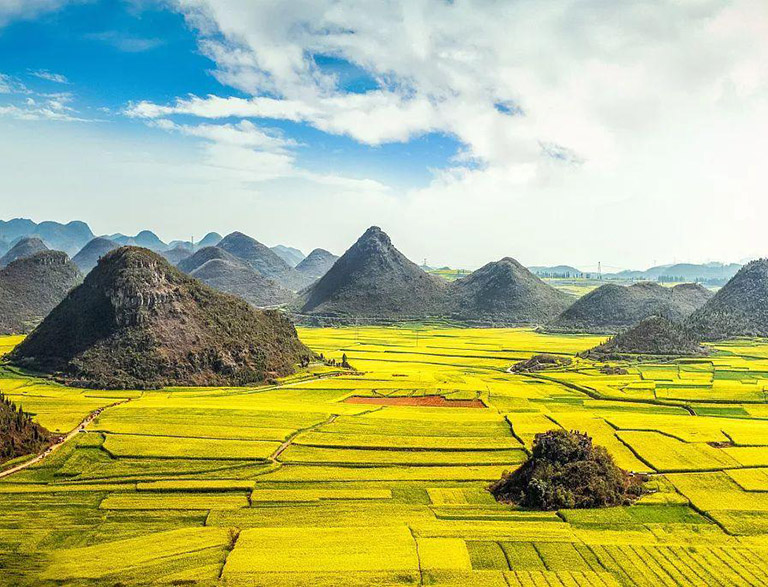
Golden Sea of Rapeseed Flowers in Luoping
- Take a Spring Hike at Yellow Mountain with blooming Yellow Flowers
Spring is the best time to visit Yellow Mountain with its surrounding ancient villages. It is a top destination in China and well connected by high-speed railway from Shanghai, Hangzhou, and Suzhou. Besides hiking up to the Yellow Mountain (Huangshan), there are many distinctive Huizhou-style ancient villages scattered at the foot of the mountain in Southern Anhui. Those villages themselves are precious historic and cultural heritages, and a good media of local traditional culture, history, and geography. With the blooming rapeseed flowers decorating the tranquil ancient villages during the springtime with a comfortable temperature, these ancient villages have become more idyllic and romantic. The recommended villages include Hongcun Ancient Village, Xidi Ancient Village, Nanping Ancient Village, Bishan Ancient Village, and Xian'an River, etc.
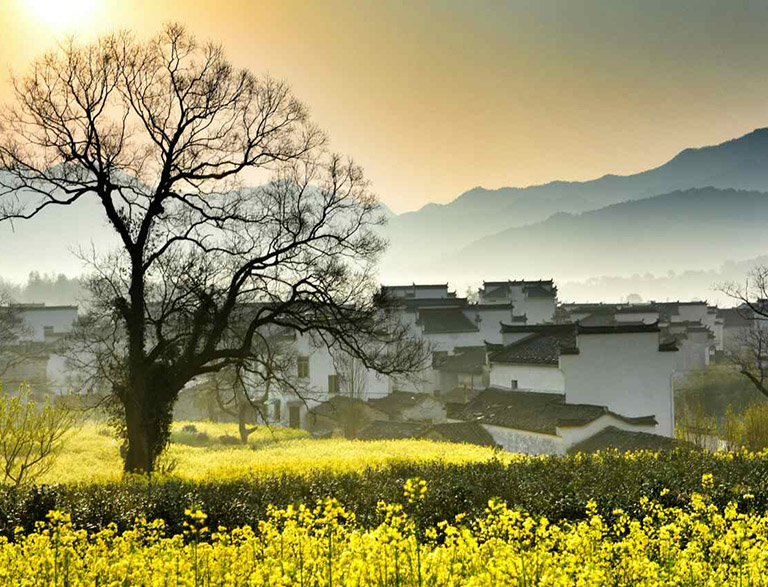
Spring Scene of Ancient Village near Huangshan
- Top Rapeseed Flowers Sea for Photography
Besides Luoping, Wuyuan in Jiangxi Province is another site to get immersed in the sea of flowers. It is also near Huangshan. The bright yellow rapeseed flowers decorate the remote mountainous county and it has won the reputation of being one of the most beautiful countrysides of China. Not only being famous for the blooming flowers, but Wuyuan is also a historic site to learn about traditional Hui architectures. Many of them are well-preserved and some old ones can be traced back to the 7th century. The Typical white walls and black tiles on them with yellow rapeseed flowers blooming on the slopes and terraces around the village form an idyllic tranquil scene.
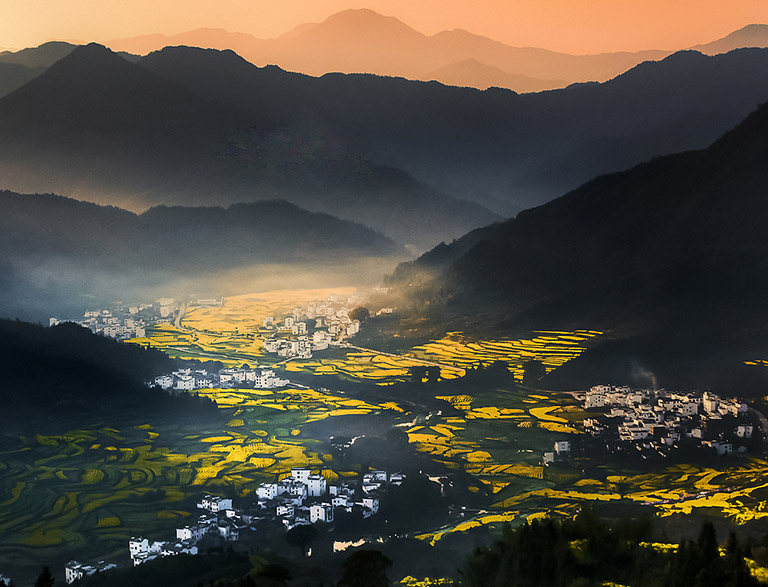
Wuyuan villages in the morning mist
- Picking fresh Tea Sprouts in Longjing Tea Plantation and Gentle Spring Breeze on West Lake
Spring is the best time to visit Hangzhou, while the march is the golden time to pick the No. 1 China Tea, Longjing tea, or dragon well tea. In Hangzhou, there are many time-honored tea villages, plantations, parks, and even a museum related to the Longjing tea culture. Among them, Meijiawu village, 13km away from Hangzhou downtown, is well renowned for many celebrities, country and regional heads have visited there. In the morning, you can carry a little bamboo basket with the tea pluckers and pick the tea roaming around the lush tea plantation and return with these green treasures and learn how to bake the tea, as well as the tea art performance and introduction.
Besides the tea plantations, Lingyin Temple and West Lake in Hangzhou are unmissable sites to visit in March. Printed in the banknote, West Lake is the landmark site of Hangzhou. Beautiful pavilions, pagodas, gardens, temples, bridges, are built around this lovely lake. Biking, jogging, or boating on the lake with the gentle spring breeze forms a tranquil Chinese scene. With over 1700 years' history, Lingyin temple is a well-renowned temple with lush forest, marveling Feilai Peak beside there, and countless Buddhist treasures.
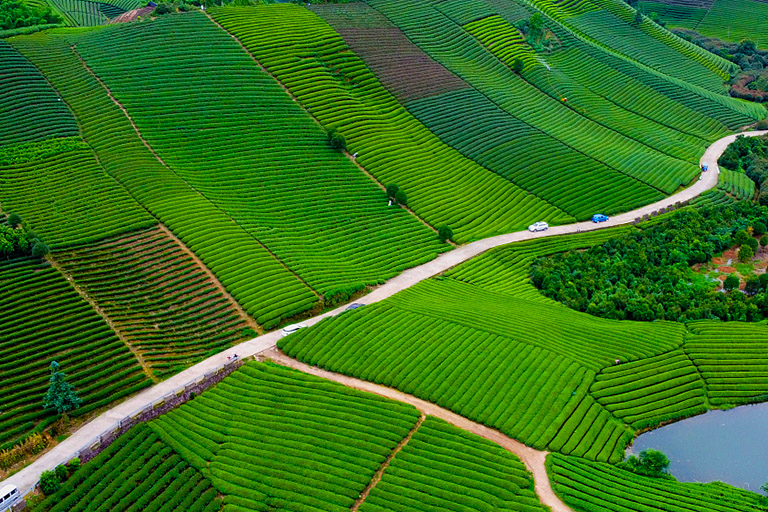
Tea Plantation in Hangzhou
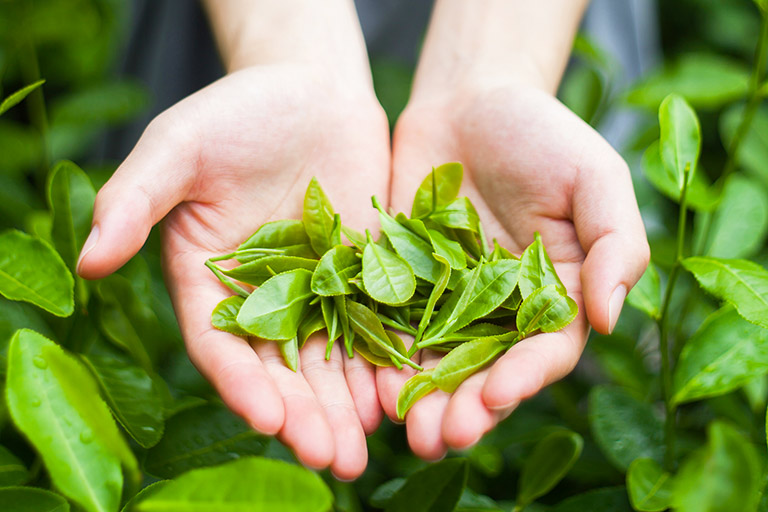
Fresh Spring Tea
- White Sea of Pear Blossom and Tibetan Villages
Located in the west of Sichuan Province, Jinchuan is about 490km away from Chengdu, one of the best places to see the "Snow Pear" blossoms. The moderate climate and untouched highland have nourished this white snow sea of pear blossom in every march. The best places to see pear blossoms in Jinchuan include Shenxianbao Viewing Platform, Pear Garden in Jinchuan, Ge'erxiang, Jinjiangcun Viewing Platform, Dapingcun, Danzhamucun, etc. The picturesque snow pear flower sea attracts many photographers here. Besides, there also many historic sites like the Guangfa Temple and Buddhist sites like Guanyinqiao Scenic Area and Guanyinqiao Religious Cultural Area with many interesting Tibetan-style architectures.
About 100km from Jinchuan, Danba is a small county in Garze that also offers a picturesque spring scene of snow pear blossoms. With many interesting Tibetan watchtowers and houses of the local Jiaju villages inlaid, the vast green land of Danba is well decorated with pear blossoms, forming a fairyland. In March, it is still cold in Danba and Jinchuan, and the average temperature ranges between 4°C-11 °C, and it is colder at night. You may need to bring some extra layers to keep warm.
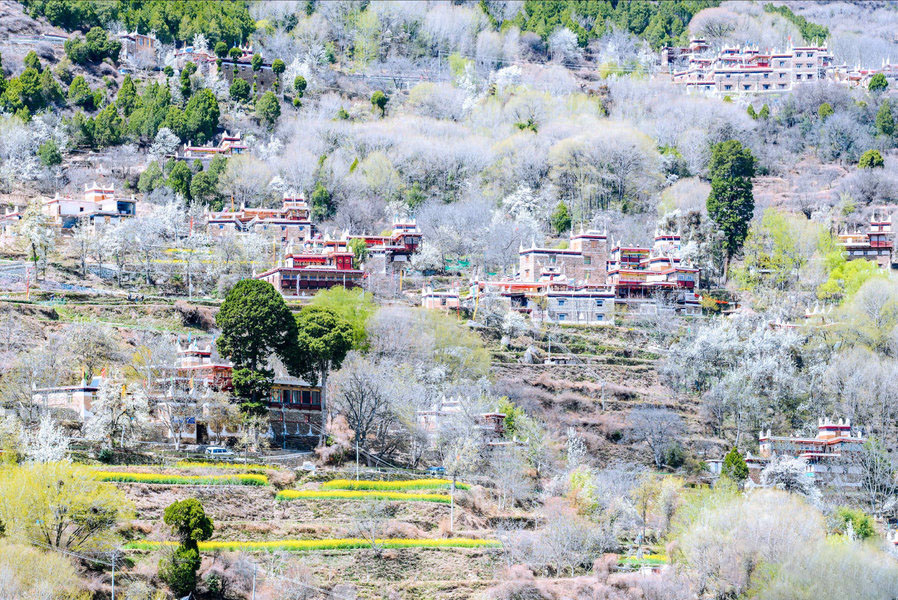
Jinchuan Pear Blossom in Spring
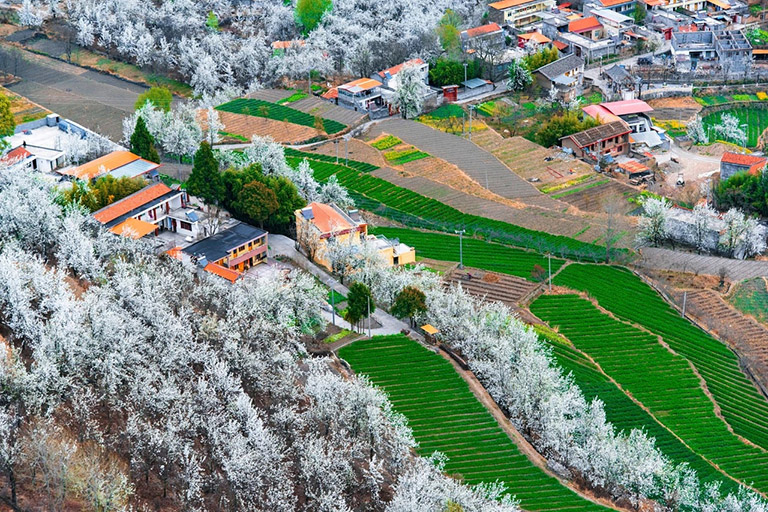
Jinchuan Pear Blossom in Spring
- Imperial Hiking Route with Romantic Peach Blossoms
Listed in the world natural & cultural heritage site in 1987, Mount Tai is the foremost of the Five Sacred Mountains in China. There are over 72 ancient Chinese emperors who have visited the mountain. Even Confucius has hiked to the top and sighed "the world is small". Numerous ancient temples, tablets, inscriptions have been well preserved here. It is a symbol of Chinese culture in many ways. During springtime in March, the solemn mountain has become more romantic as the spring peach trees waking up with pink blossoms. Traveling from the west side of Taohuayuan uphill to the Jade Emperor Peak, you will encounter the natural beauty of the majestic mountain with fewer crowds. Also, it may be cold in the early spring and nighttime, so bring some extra layers or rent a down jacket to keep warm on the mountain.
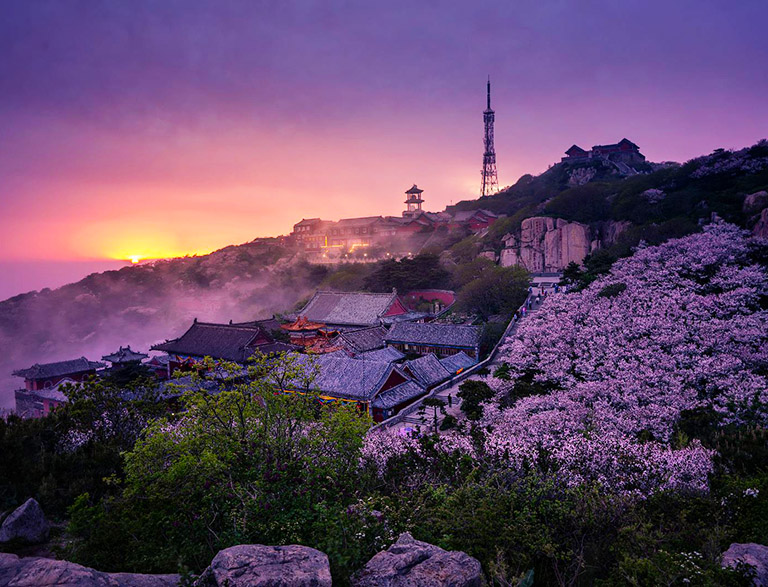
Mount Tai at dawn
- The Most Beautiful Pink Sea of Peach Blossoms on the untouched Highland
Nyingchi is a prefecture city at an average altitude of 3000 meters above sea level. It is home to Tibetan and many other ethnic groups in China with the peach flower as its symbol. For its remote locations, Nyingchi preserves many beautiful lakes, awesome gorges, lush forests, while the pink blossoms in spring add some romantic vibes to the springtime of Nyingchi, known as the "East Switzerland". Usually, the annual Nyingchi Peach Blossom Festival starts in late March and the beautiful scenery attracts many photographers. The pink peach trees are like gems, inlaid in the vast green land and harmony with the villages. The best sites to see peach blossoms in Nyingchi are Gala village, Yarlung Zangbu Grand Canyon, Nyang River, Bome County, etc. During the Nyingchi Peach Blossom Festival, you can also join and experience some interesting activities there, such as horse racing, archery, stone-carrying competition, Tibetan dancing, and singing fairs, etc. Since the altitude is high and the temperature drops a lot during the night time, you may need to pack some extra layers for the event.
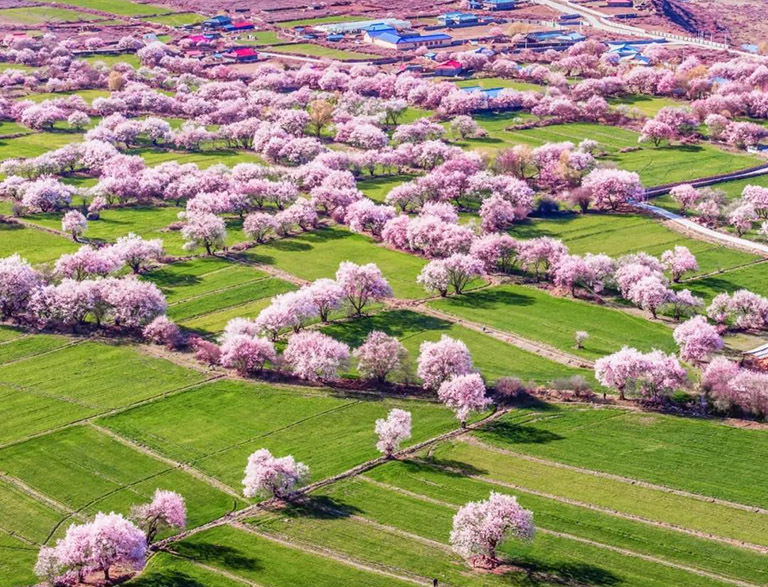
Nyingchi Peach Blossoms
Spring is a good season to visit most destinations in China. You can plan a China spring tour based on your own holiday time, destination, personal hobby and budget, members of the group, etc. Labor Day holiday from May 1 is a peak tourist period you should avoid. Read on below guide for more inspiring ideas.
If it's your first trip to China, then Beijing, Shanghai, Xian, Chengdu are the top classic destinations you may visit. Normally, 2 to 3 days are enough for each. For those who already visited them, the Yangtze River Cruise (4-5 days), Yunnan (Lijiang, Shangri-La, Dali, Kunming..., 5-8 days), Guilin (3-4 days), Zhangjiejie (3-5 days) are highly recommended palaces to make in-depth discovery of China. Suzhou, Hangzhou, Huangshan, Nanjing are popular side trip destinations from Shanghai. If you have a long vacation, you can travel to several destinations together. If you're quite interested in spring flowers, Nyingchi Peach Blossom in Tibet and Wuyuan Rape flower are the most beautiful colors you may make a special visit. Depending on your private taste, there are many more choices for you to appreciate the spring blossom across China.
To help you enjoy a worry-free spring trip to China, we highly recommend you travel with us WeTrip. Our experienced travel expert will help you arrange your trip sincerely. Our local drivers will escort you to the attractions with comfortable cars directly with speed and safety. And our English-speaking tour guide will accompany you all the way, show you the best highlights, so you can focus all your attention on the highlights. Whether you have planned places to go or have no idea, your China spring tour can be tailor-made according to your group size, time, physical condition, plan, interest, budget, etc. Please feel free to contact us if you need any help!
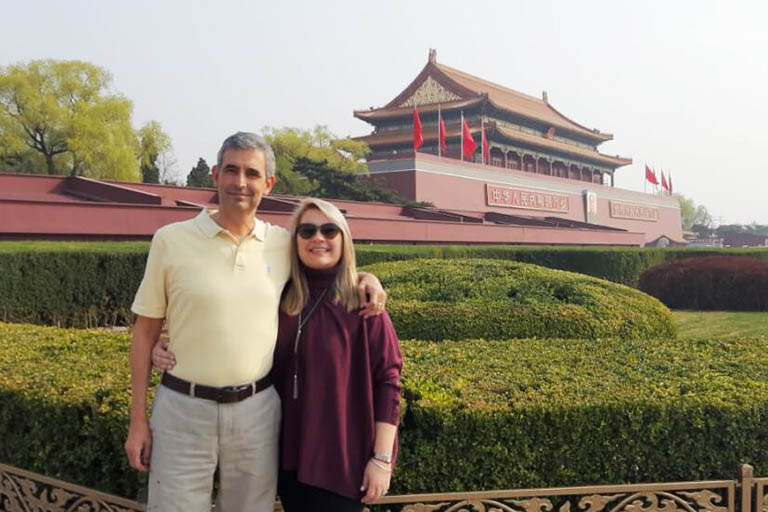
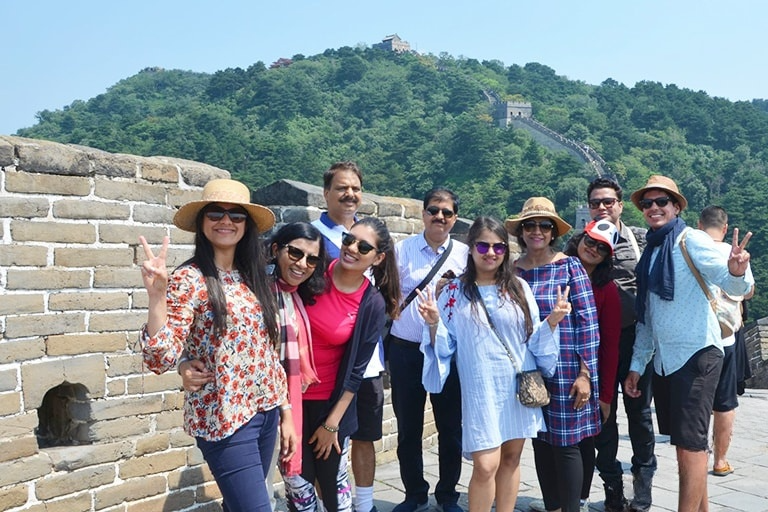
Our Customers Enjoyed Their China Spring Holiday in Beijing






About WeTrip
Your Trusted Way to China
U.S.-registered and backed by Nasdaq-listed WeBuy Global Ltd., supported by professional teams across Singapore, China, and Malaysia.
Follow Us